博客

  • Introduction to Copper Mesh (Purple Copper Net)

    Introduction to Copper Mesh (Purple Copper Net)

    Copper mesh, also known as purple copper net, is a woven wire mesh made from high-purity copper. It is valued for its excellent electrical conductivity, thermal conductivity, corrosion resistance, and ductility, making it widely used in various industries. The mesh is characterized by its “mesh count,” which refers to the number of openings per linear inch (25.4 mm). A higher mesh count indicates smaller openings and finer filtration, while a lower mesh count means larger openings for coarser applications.

    Our Products: 40 Mesh and 100 Mesh Copper Mesh

    We offer both 40 mesh and 100 mesh copper mesh to meet diverse application needs:

    40 Mesh Copper Mesh

    • Description: This mesh has 40 openings per inch, resulting in relatively larger holes with an aperture size of approximately 0.4–0.5 mm (depending on wire diameter).
    • Applications: Ideal for coarse filtration, shielding, or decorative purposes. Commonly used in industries like construction, agriculture, or for EMI/RFI shielding in electronics due to its balance of openness and durability.
    • Features: Offers good airflow and visibility while maintaining strength and corrosion resistance.

    100 Mesh Copper Mesh

    • Description: With 100 openings per inch, this mesh has smaller holes, with an aperture size of approximately 0.14–0.15 mm (depending on wire diameter). It is a finer mesh suitable for precision applications.
    • Applications: Perfect for fine filtration in industries such as chemical processing, pharmaceuticals, or food production. It is also used in scientific research for particle separation or as a conductive layer in electronic components.
    • Features: Provides high precision filtration, excellent conductivity, and resistance to corrosion in harsh environments.

    Why Choose Our Copper Mesh?

    • Material Quality: Made from high-purity copper, ensuring superior conductivity and longevity.
    • Versatility: Available in 40 mesh for coarser applications and 100 mesh for finer filtration, catering to diverse needs.
    • Customization: We can provide tailored specifications, including different wire diameters or roll sizes, to meet specific requirements.

    Whether you need robust shielding with 40 mesh or precise filtration with 100 mesh, our copper mesh offers reliable performance for industrial, scientific, or decorative applications. Contact us for more details or to discuss your specific needs!

  • Magnetic Electric Motor Starters – Reliable Start & Protection

    Magnetic motor starters are essential components for the safe and efficient operation of electric motors. Whether for single-phase or three-phase systems, they are designed to start, stop, and protect motors from overloads and voltage fluctuations.

    Available Models:

    • 220V 2.2KW–3HP Magnetic Starter (Single Phase, Front Button)
    • 220V 4KW–5.5HP Magnetic Starter (Single Phase, Front Button)
    • 220V 5.5KW–7.5HP Magnetic Starter (Single Phase, Front & Side Button)
    • 220V 11KW–15HP Magnetic Starter (Single Phase, Front Button)
    • 380V 2.2KW–3HP Magnetic Starter (Front Button)
    • 380V 4KW–5.5HP Magnetic Starter (Front Button)
    • 380V 5.5KW–7.5HP Magnetic Starter (Front & Side Button)
    • 380V 11KW–15HP Magnetic Starter (Front Button)

    Key Features:

    • Durable steel enclosure for industrial use
    • Built-in overload protection
    • Color-coded ON/OFF buttons for intuitive control
    • Supports both single-phase and three-phase motors
    • Compact design and easy wiring

    Applications:

    • Air compressors
    • Water pumps
    • Textile machinery
    • Agricultural equipment
    • HVAC systems and general motor control

    Installation Notice:

    All magnetic motor starters must be installed by a qualified electrician or technician. Ensure compatibility with your voltage and horsepower requirements before installation.

    Magnetic Starter - Front View

    Magnetic Starter for Air Compressor

    Wide Application Motor Starter

  • Comparison of C110/T2 and C122/TP2 Copper Standards

    Comparison of C110/T2 and C122/TP2 Copper Standards

    Copper alloys are widely used in industries for their excellent electrical conductivity, thermal conductivity, and corrosion resistance. Two commonly referenced standards, the American ASTM and the Chinese GB, define similar copper grades that are often interchangeable. This article compares C110 (ASTM) with T2 (GB) and C122 (ASTM) with TP2 (GB) to clarify their equivalence and applications.

    1. C110 vs. T2 Copper

    C110 (also known as C11000 or Electrolytic Tough Pitch copper, ETP) and T2 (per Chinese GB/T 5231-2012) are high-purity copper grades designed for superior electrical and thermal conductivity.

    Chemical Composition

    GradeStandardCopper (Cu+Ag)OxygenOther Impurities
    C110ASTM B124/B124M≥99.90%≤0.04%Minimal
    T2GB/T 5231-2012≥99.90%≤0.05%≤0.1% total

    Both grades have nearly identical copper purity, with slight variations in oxygen and impurity limits that rarely impact practical use.

    Properties and Applications

    • Conductivity: Both achieve an IACS (International Annealed Copper Standard) rating of 97-100%, ideal for electrical wiring, busbars, and conductors.
    • Thermal Conductivity: Approximately 386.4 W/(m·K), suitable for heat exchangers and radiators.
    • Workability: Excellent ductility allows cold and hot forming, welding, and brazing. However, due to trace oxygen, they are susceptible to “hydrogen embrittlement” in high-temperature reducing atmospheres.
    • Corrosion Resistance: Outstanding in atmospheric conditions, seawater, and non-oxidizing acids.

    Applications: C110/T2 copper is used in electrical cables, connectors, screws, and heat exchanger components in aerospace, electronics, and chemical industries.

    Standards Equivalence

    C110 (ASTM C11000) directly corresponds to T2 (GB). It also aligns with:

    • JIS C1100 (Japan)
    • Cu-ETP (CW004A) (European EN standard)

    2. C122 vs. TP2 Copper

    C122 (C12200, Deoxidized High Phosphorus copper, DHP) and TP2 (GB/T 5231-2012) are phosphorus-deoxidized copper grades with low oxygen content, designed for applications requiring welding and resistance to hydrogen embrittlement.

    Chemical Composition

    GradeStandardCopper (Cu+Ag)Phosphorus (P)Oxygen
    C122ASTM B124/B124M≥99.90%0.015%-0.040%Minimal
    TP2GB/T 5231-2012≥99.90%0.015%-0.040%Minimal

    The identical copper and phosphorus content ensures equivalent performance in low-oxygen environments.

    Properties and Applications

    • Conductivity: Slightly lower than C110/T2 at ~80-85% IACS, but sufficient for many electrical applications.
    • Thermal Conductivity: Around 339 W/(m·K), excellent for heat transfer.
    • Workability: Superior weldability and formability, with no risk of hydrogen embrittlement in reducing atmospheres.
    • Corrosion Resistance: Comparable to C110/T2, ideal for water and gas systems.

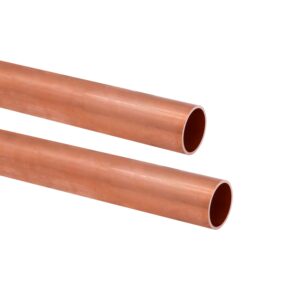
    Applications: C122/TP2 is preferred for refrigeration tubing, air conditioning coils, plumbing, gas pipelines, and marine systems due to its welding advantages.

    Standards Equivalence

    C122 (ASTM C12200) directly corresponds to TP2 (GB). It also aligns with:

    • JIS C1220 (Japan)
    • Cu-DHP (CW024A) (European EN standard)

    Key Considerations

    • Interchangeability: C110/T2 and C122/TP2 are interchangeable in most applications, but C122/TP2 is preferred for welded components and high-temperature environments.
    • Condition: Both grades are available in soft (annealed, e.g., T2M/TP2M, O temper) or hard (e.g., T2Y/TP2Y, H temper) states, selected based on processing needs.
    • Specifications: For critical applications (e.g., aerospace or electronics), verify oxygen or impurity limits per ASTM or GB standards.

    Conclusion

    C110 and T2 are equivalent high-purity electrolytic copper grades, while C122 and TP2 are equivalent phosphorus-deoxidized copper grades. Their identical compositions and properties ensure seamless use across international projects, with C110/T2 excelling in conductivity and C122/TP2 in welding and hydrogen embrittlement resistance. Understanding these equivalences simplifies material selection in global engineering applications.

  • A Complete Guide to Choosing the Right Copper Sheets for House Repairs (with Thickness Insights)

    A Complete Guide to Choosing the Right Copper Sheets for House Repairs (with Thickness Insights)

    Copper is a trusted and timeless material for home repairs due to its durability, corrosion resistance, and attractive finish. Whether you’re tackling roof flashing, installing new trim, or upgrading your kitchen backsplash, choosing the right type and thickness of copper sheet is critical for a long-lasting and effective result.

    Understanding Copper Sheet Types and Thickness

    Copper sheets are available in different formats and thicknesses to suit various applications:

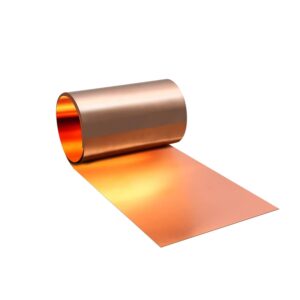
    • Copper Foil (under 0.2mm): Ideal for crafts, electrical insulation, and light decorative use.
    • Standard Copper Sheets (0.3mm–1.0mm): Great for flashing, paneling, and light construction work.
    • Thicker Copper Plates (1.2mm+): Suitable for structural, decorative, or high-impact areas.

    Typical Thickness Chart:

    • 0.3mm–0.5mm: Flexible and light, for flashing and wraps
    • 0.6mm–1.0mm: Medium weight, great for gutters and trims
    • 1.2mm–2.0mm: Rigid and strong, for countertops, panels
    • 2.5mm+: Industrial-grade, structural or heavy-duty use

    Key Factors When Choosing Copper Sheets

    1. Project Type and Load Requirements

    Is the copper being used as an exterior shield, or does it need to support structural stress? The thicker the copper, the more strength and weather resistance it offers.

    • Roof flashing: Use 0.3–0.5mm
    • Rain gutters: 0.6–0.9mm
    • Window and door trim: 1.0–1.5mm
    • Kitchen or bathroom panels: 1.2–2.0mm
    • Beam or structural overlay: 2.5mm+

    2. Material Grade

    The two most common grades used for house repairs are:

    • C110 (ETP Copper): Excellent conductivity, general-purpose use.
    • C122 (DHP Copper): Great corrosion resistance, ideal for outdoor or plumbing work.

    3. Budget and Workability

    Thicker copper costs more and may require specialized tools for cutting or shaping. Thinner sheets are easier to install and manipulate, but may not offer the same durability.

    Common Applications & Suggested Thickness

    ApplicationRecommended ThicknessNotes
    Roof Flashing0.3mm – 0.5mmLightweight, easy to mold
    Rain Gutters0.6mm – 0.9mmBalances strength and flexibility
    Trim & Edging1.0mm – 1.5mmDurable against weather and wear
    Wall Panels & Countertops1.2mm – 2.0mmIdeal for decorative and functional areas
    Structural Backing2.5mm+Heavy-duty support and long-term use

    Installation & Maintenance Tips

    • Measure carefully: Account for folds, overlaps, and bends
    • Use the right tools: Snips for thin copper; nibblers or saws for thick plates
    • Avoid corrosion: Use copper nails/screws or stainless steel fasteners
    • Finish it off: Consider patina or sealants based on your desired look

    Conclusion

    Whether you’re flashing a roof or upgrading a kitchen, selecting the right thickness of copper sheet can make all the difference in performance and lifespan. At Uxney Metal, we carry copper sheets in a wide range of thicknesses to meet every need—reach out today and let us help you build with confidence.